Blue Heron 2026
07/24/2026
I’ve been feeling pretty tired of writing (&cetera) that makes its primary formal gesture Trauma’s Vaunted Inexpressibility. I do think, actually, that you should try to express it, that your failures in doing so would say more about inexpressibility than centering your unwillingness (or perceived inability) to try. This is to say that Blue Heron was excellent and Still Processing was bad in the way that student documentaries that use family photo archives are bad.* I want to write about Blue Heron but it’s provoking me in a personal essay direction that could very easily become posting through it. It’s hard and special when a film touches me so much I become undisciplined in my thinking about it. Writing that out sounds so neurotic! Oh well. It’s MY BLOG and if you’re reading this you’re MY FRIEND and I trust you.
***The only photos I have of myself as a child are from a Shutterfly-type album my mom made everyone for Christmas the year before my dad died, ominously titled “The Beares... pre-2014,” that being the year G went away. I wouldn’t see him for more than a couple hours until we were both in our twenties. I wasn’t angry at him until we got to know each other again as adults. I don’t remember any of the photos being taken and I’d never seen them before— we’ve never been a “reminiscing family,” for obvious reasons. I know they’re my mom’s picks because almost without exception I am wearing a dress and headband. In the one that looks most like me, I am up a tree reading a book and ignoring the camera. I have the Ash Wednesday smudge on my forehead. I finished Blue Heron and wanted to dig the album out from where I’ve hidden it from myself, find G and I sticking our hands in tide pools and looking like a united front.
***A (maybe The) major project of this year has been talking to my friends about how I’m feeling so nobody gets scared. Last summer I was sitting on the porch with Weaver while they were still chain smoking and I said I felt like I talked about my dad too much and they said I had brought it up twice in 7 years. I wish I had known a version of Maxine who wasn’t starting over, wasn’t so closely guarded, had lived the last year with us and gotten better at everything we’ve all been trying to get better at together. I want to know what she thinks about the dead brother movie but the version of her I knew would not have been willing to talk about it.
***Blue Heron is pretty singular at capturing the feeling of being in a household that is wholly oriented towards a single member. The defining feature of that, in my experience, was silence— horrible extended pregnant pauses where you know something is going wrong that hasn’t arrived yet, yawning empty space when everyone has separated after it arrives. I saw some criticism of the film that suggests it should give more of a sense of what happened. This, to me, is a misread— the point is that most of the time, nothing is happening, and it’s still everywhere. One of the fantasies that springs up in a dynamic like this is that the removal of the central figure will lead to ease. When G was gone, first my parents stopped coming home, then I did too. We had no practice at moving in undisrupted space. Other failures became more apparent.
I knew I would like the film from the opening credits. The first part that broke me wide open was the scene where she gives her brother’s file to a focus group of social workers. She watches in real time as they fail, as they suggest solutions that they admit won’t work, as they say things have changed and say they’re still failing. I said earlier that I find traumatic impossibility gestures frustrating. I think this film works for me where others don’t because she tries so hard to touch it directly.
In Lou’s beautiful, perceptive essay, which is much more about the film than I’ve been able to manage, he says:
“When you are young, all you want is to know what’s going on. When you are old, you are desperate to return to the time before you knew.”My mom is dying, so now I get to ask her about the decisions she made. Every time, she tells me more than I knew, and tells me she didn’t know what else to do. I tell her she got it wrong and fail to come up with a better answer than believing I wouldn’t have been in that situation in the first place. She doesn’t apologize. ***
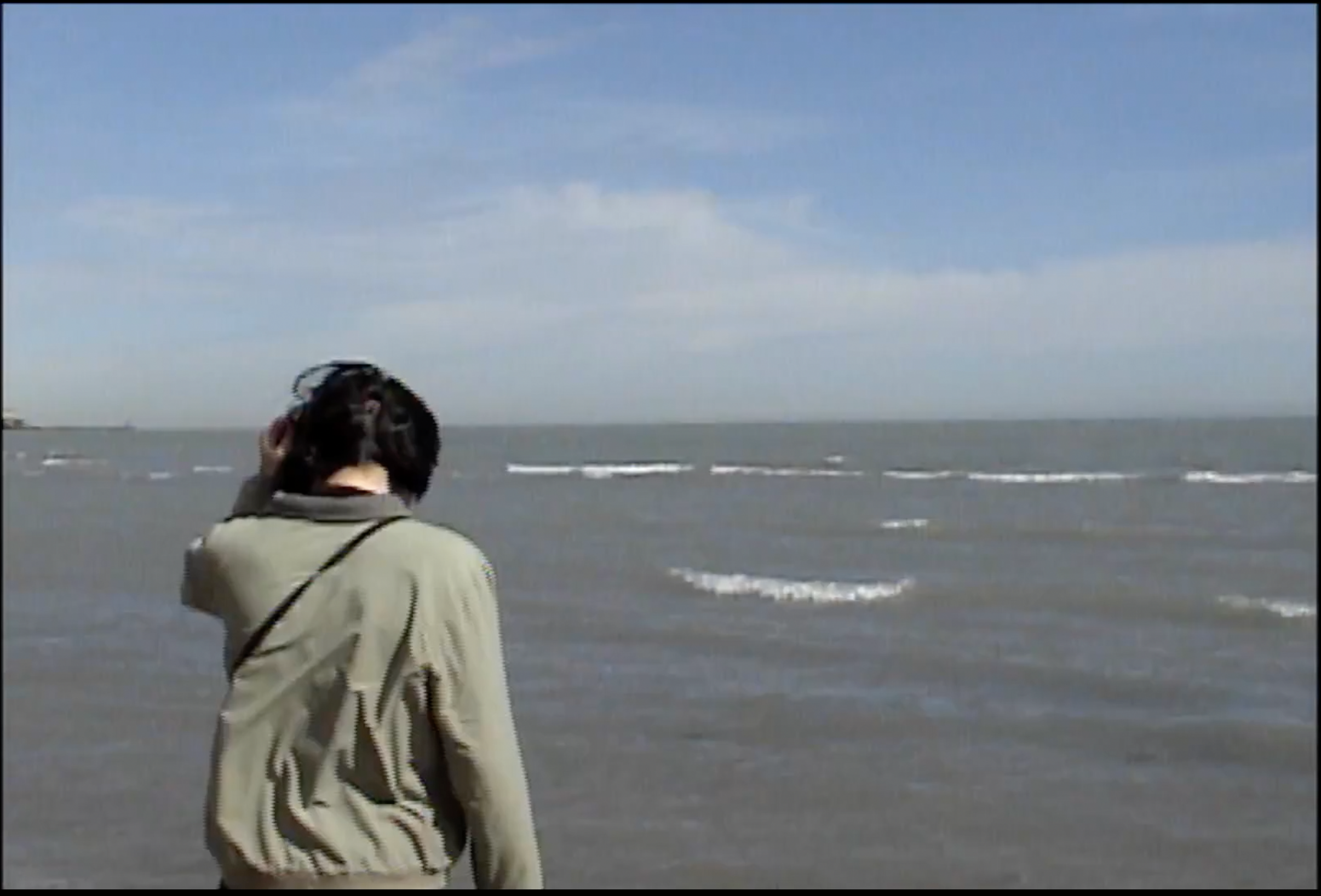
When Maxine died, Madi and I got one way tickets back to Massachusetts. We all pooled our photos in a google drive for her parents: I thought a lot about which ones they didn’t have the right to see. I had Elio mail me my camcorder, spent several days trying different methods to transfer the tapes I knew she was on. In most of them, she looks a little miserable, which she was, I guess. But they have her funny honking laugh, and all of us on the beach. Last winter, I got scared if I filmed anyone else with it, they’d die too. I’m over that now.
***
*TO BE CLEAR there’s a lot to like— I wonder whether it would have worked for me if I saw it first, though I watched it with Hellie, who hadn’t seen Blue Heron and also didn’t like it. The Simon and Garfunkel cover is genuinely difficult to look past even if it is deeply felt and has some striking images. I HATED the subtitles. The distance engendered by directing actors seems really essential to making her project work.
currently reading:
listening to:
watching: